


Church of the Immaculate Conception (Spanish Church / La Purísima)
Church of the Immaculate Conception (Spanish Church / La Purísima)
About this place
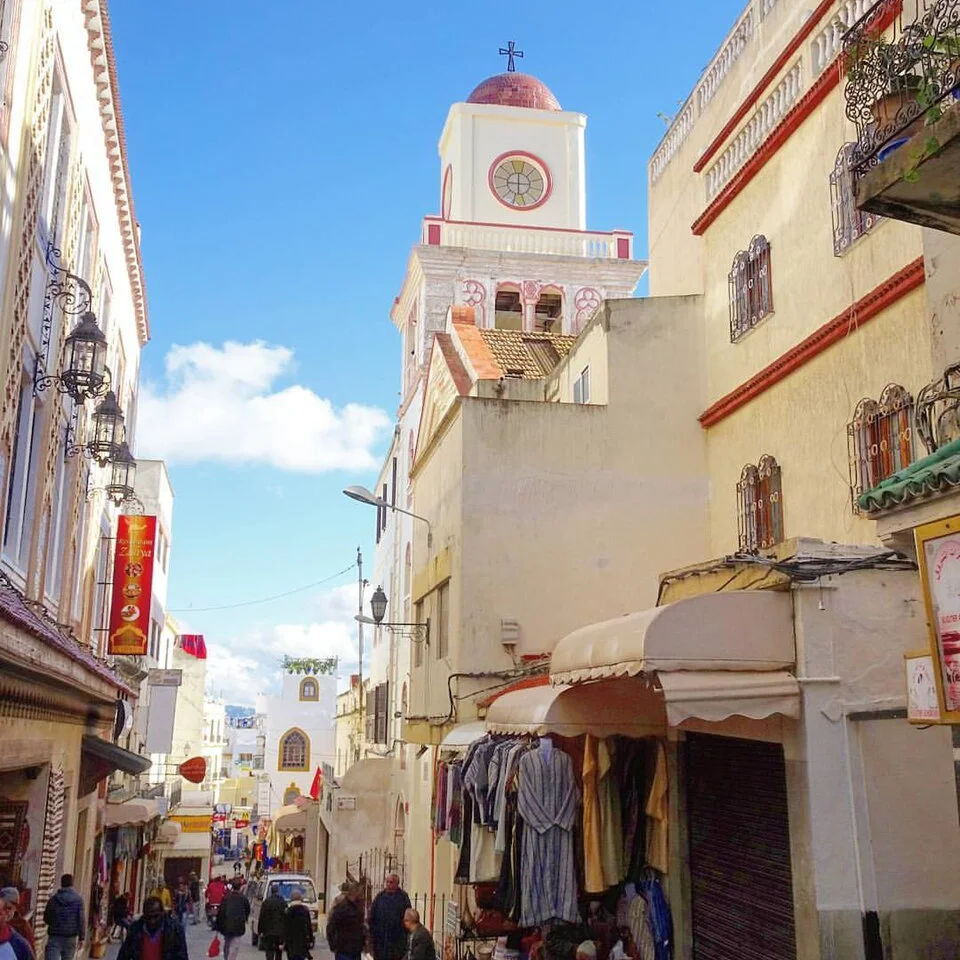
The Church of the Immaculate Conception, affectionately known as La Purísima or the Spanish Church, is a historic Roman Catholic church located on Rue Es-Siaghine in the heart of Tangier's medina, just west of the Petit Socco. Built between 1880 and 1881, it stands on the former grounds of the Swedish legation, which had been established there in 1788 — a testament to the dense diplomatic presence that characterized pre-International Zone Tangier. The church was designed by Spanish architect Manuel Aníbal Álvarez Amoroso on the initiative of Franciscan Father José María Lerchundi, a pivotal figure in the Catholic Church's modern presence in Morocco. Construction was funded by the Spanish government and the Obra Pía, with work beginning in October 1880. The church initially served the entire Catholic community of Tangier, including European diplomats of various nationalities, at a time when the city was becoming an increasingly important international center. A distinctive clock tower was added in 1892–1893, originally topped with a spire that was later replaced by the present cupola. For decades, La Purísima was the principal Catholic church in Tangier until the larger cathedral was completed outside the medina. More recently, the property has been used by the Missionaries of Charity, who in 1996 altered the interior by partitioning the former nave into two floors. Despite these changes, the church remains an important landmark in the medina, its presence on one of the main commercial streets a reminder of the Spanish religious and cultural influence that shaped Tangier during the late 19th and early 20th centuries.