


Koutoubia Mosque
Koutoubia Mosque
About this place
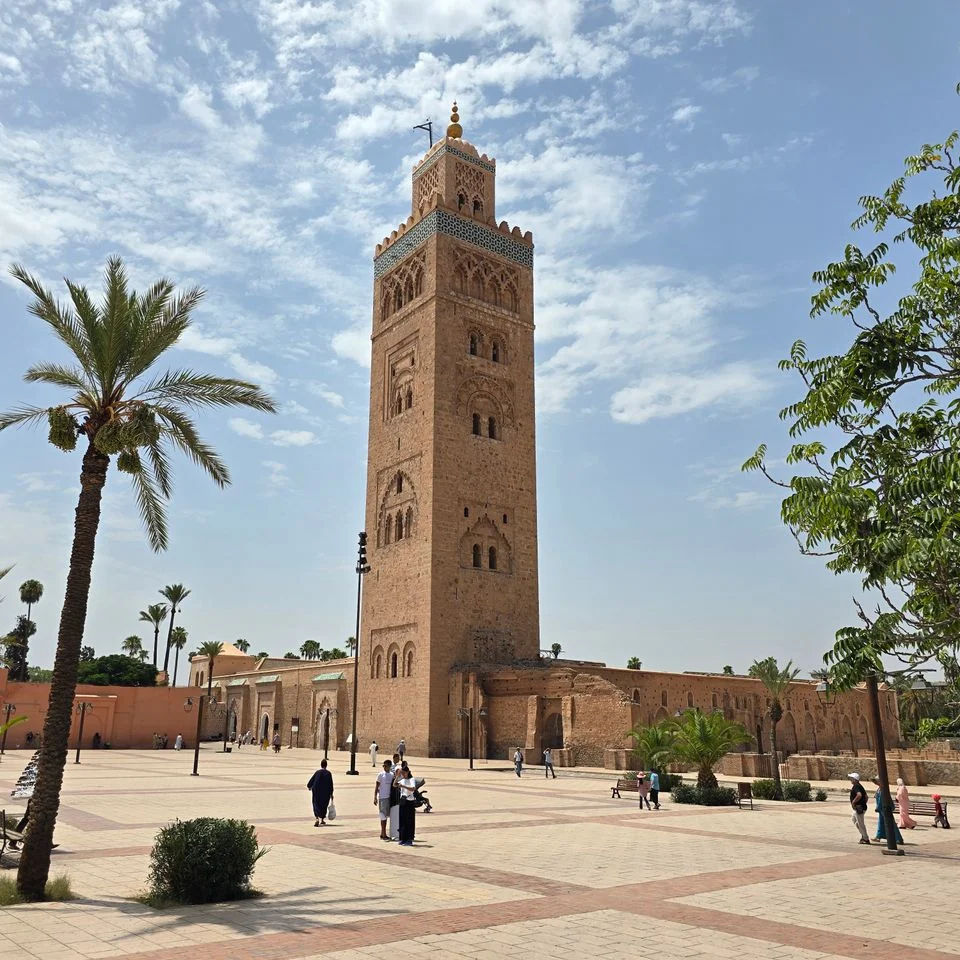
The Koutoubia Mosque stands as Marrakech's most enduring architectural symbol, its construction beginning shortly after the Almohad Caliph Abd al-Mu'min captured the city from the Almoravids in 1147. The mosque was actually built twice on the same site — the first version, completed around 1157, was discovered to be misaligned with the qibla (direction of Mecca), prompting the construction of a second, properly oriented mosque immediately to the south. The minaret we see today was completed around 1195–1199 under Abd al-Mu'min's grandson, Caliph Yaqub al-Mansur. Rising to approximately 77 meters, it became the prototype for Moroccan minaret architecture and influenced structures as far as the Giralda in Seville and the Hassan Tower in Rabat. The name "Koutoubia" derives from the Arabic "kutubiyyun" meaning booksellers, as a manuscript market once thrived nearby, reflecting the mosque's role not only as a religious center but as a hub of intellectual life during the Almohad golden age when Marrakech was one of the great centers of learning in the Islamic world.