





Menara Gardens & Pavilion
Menara Gardens & Pavilion
About this place
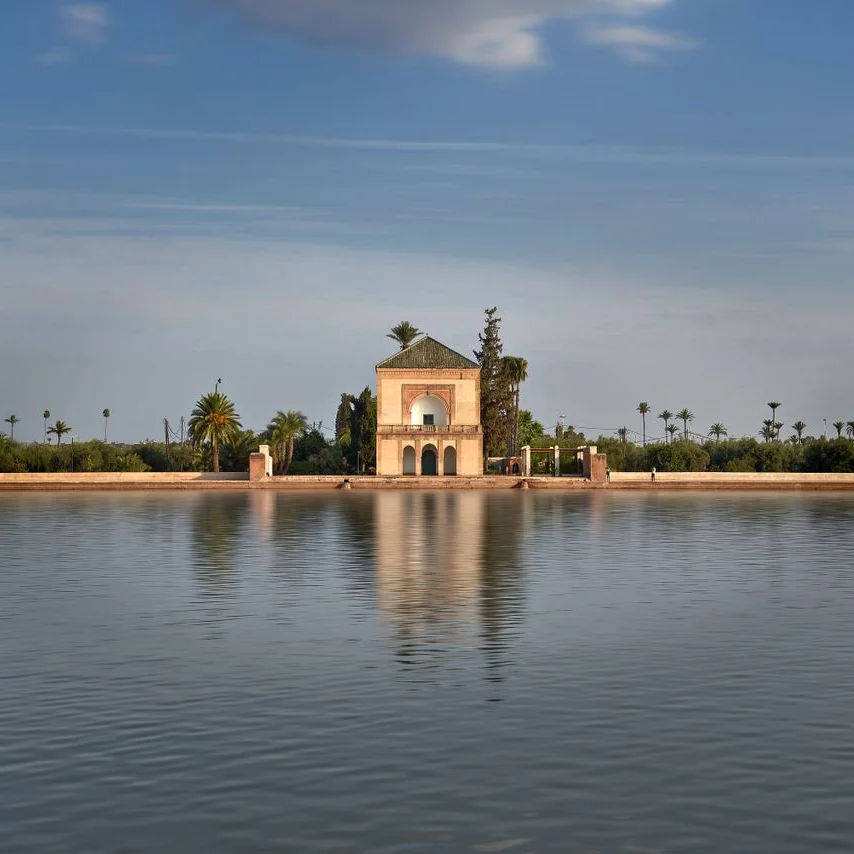
The Menara Gardens were established in 1157 by Almohad Caliph Abd al-Mu'min, the founder of the Almohad capital in Marrakech, at the same time as the nearby Agdal Gardens. Originally created as both productive orchards and pleasure gardens, the site served military and utilitarian functions — the large irrigation basin was used to water extensive olive groves and provided a swimming and training ground for Almohad troops returning from campaigns in Al-Andalus. The gardens were connected to the city by a specially built road from the Royal Palace through a gate known as Bab El Mahzan. The distinctive pavilion that gives the site its name — "menara" meaning lighthouse or tower — was built in the 16th century under Sultan Sidi Muhammad but was drastically altered during a restoration in 1869, when its characteristic green pyramid-shaped tile roof was added. The basin has been supplied with water from the Atlas Mountains via underground channels since the 12th century. Over the centuries, the gardens have been wrapped in legend, including tales that the basin covers treasure buried by Marrakech's Almoravid founder, or that Sultan Moulay Ismail drowned his enemies here. Today, the olive trees and reflecting pool with Atlas Mountain views form Marrakech's most iconic landscape.