


Mouassine Mosque & Fountain
Mouassine Mosque & Fountain
About this place
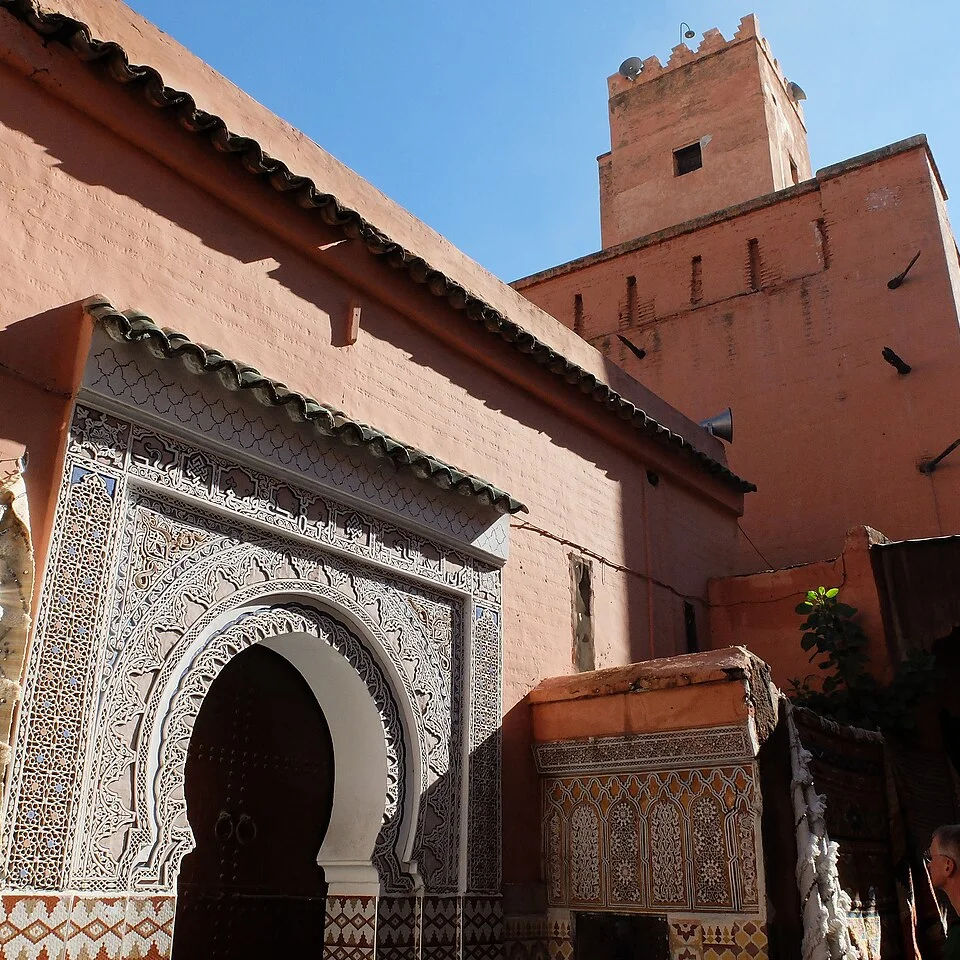
The Mouassine Mosque and its adjoining fountain complex represent one of the most significant architectural achievements of the Saadian dynasty in Marrakech. Built in the 16th century under Sultan Abdallah al-Ghalib, the complex includes not only the mosque but also a library, hammam, madrasa, and the Mouassine Fountain — one of the largest and most important public fountains in the city. The fountain was a critical piece of civic infrastructure in a city where access to water was both a practical necessity and a religious obligation, providing fresh water for ablutions, drinking, and daily use to the surrounding neighborhood. Its decorated facade features geometric patterns and Arabic inscriptions that exemplify Saadian decorative art. The mosque itself served as an important center of worship and learning in the northern medina. The ensemble reflects the Saadian approach to urban planning, where religious, educational, and public welfare functions were integrated into unified architectural complexes. The Mouassine district takes its name from the Arab tribe that settled in this area, and the mosque complex has remained a vital part of community life in the medina for over four centuries, representing the enduring connection between Islamic architecture and the daily rhythms of Moroccan urban life.