





Place Jemaa el-Fnaa
Jemaa el-Fnaa
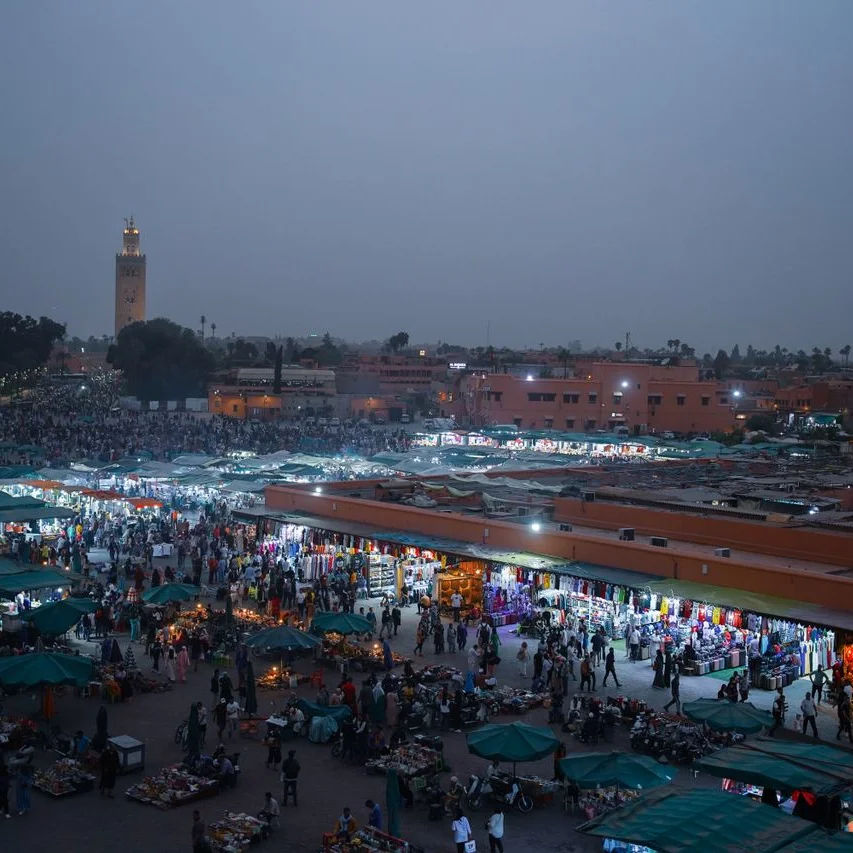
About this place
The origins of Jemaa el-Fnaa trace back to the very founding of Marrakech around 1070 by the Almoravid dynasty. For nearly a millennium, this square has served as the city's cultural and commercial epicenter. The name itself is believed to derive from "jamaa al-fna," meaning "assembly of the dead" or "place of the ruined mosque," possibly referencing public executions that took place here in medieval times or an unfinished mosque begun by Saadian Sultan Ahmad al-Mansur in the late 16th century that was abandoned due to plague outbreaks. By the 17th century, chroniclers recorded it as the "Place of the Deceased" following a devastating nine-year plague epidemic from 1598 to 1607 that killed Sultan Ahmad al-Mansur himself. Throughout its history, the square has been a place of justice, military parades, public punishment, and vibrant commerce. Today, it stands as a UNESCO World Heritage Site and intangible cultural heritage, where the traditions of storytelling, music, snake charming, and open-air food markets continue unbroken centuries after they first began.