


Tangier Cathedral (Roman Catholic Cathedral)
Tangier Cathedral (Roman Catholic Cathedral)
About this place
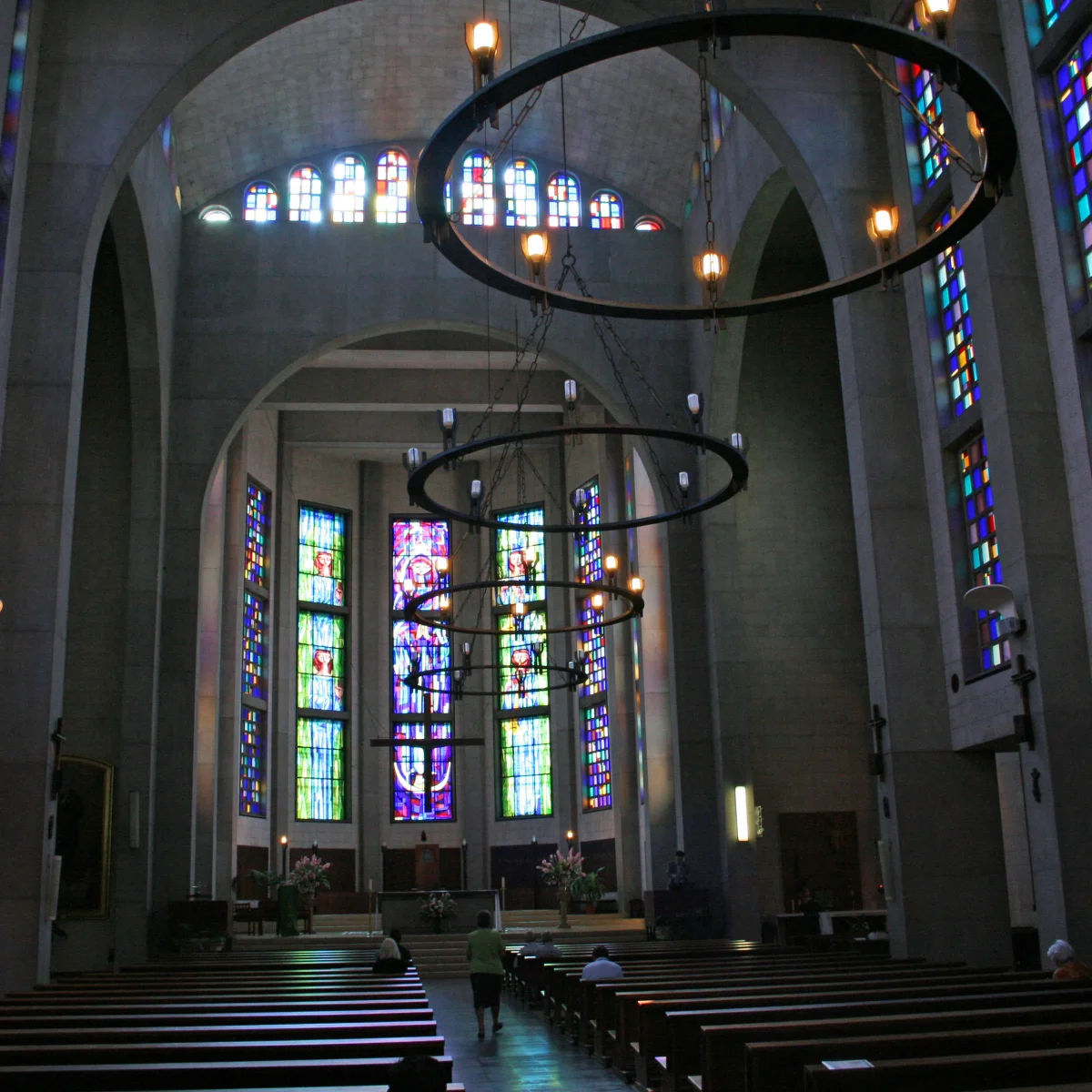
The Roman Catholic Cathedral of Tangier — officially the Cathedral of the Holy Spirit and Immaculate Conception — is a striking modernist landmark that tells the story of Spain's ambitions in Morocco during the twilight of the colonial era. The Franciscans had maintained a presence in Tangier since the Middle Ages, following their tradition of engagement with the Muslim world that dated back to St. Francis of Assisi's meeting with Sultan al-Kamil in 1219. For centuries, the only Catholic place of worship in Morocco was a small Franciscan chapel attached to the Spanish consulate near the Petit Socco. In the late 19th century, Spanish Franciscan Father José María Lerchundi expanded the Catholic presence, building the Church of the Immaculate Conception in the medina in 1880–1881. In 1891, the legendary Catalan architect Antoni Gaudí visited Tangier and, encouraged by Lerchundi, prepared a visionary design for a Franciscan convent inspired by Saharan vernacular architecture — though the project was never realized. The cathedral itself was conceived in the late 1940s as Spain sought to reassert its influence in the Tangier International Zone after the end of its military occupation in 1945. Francisco Franco personally approved the project in 1948, entrusting it to architect Luis Martínez-Feduchi. Construction began in 1950, with a cornerstone-laying ceremony in 1953, and the cathedral was dedicated on December 8, 1961 — ironically, just as Morocco's independence was making the vision of a Spanish-dominated Tangier obsolete. The building features a luminous, angular nave and a soaring 45-meter bell tower inspired by St. Mark's Campanile in Venice. It became the seat of the newly established Archdiocese of Tangier in 1956 and remained the tallest building in the city until the Mohammed V Mosque was dedicated in 1983.