





The Medina Souks
The Medina Souks
About this place
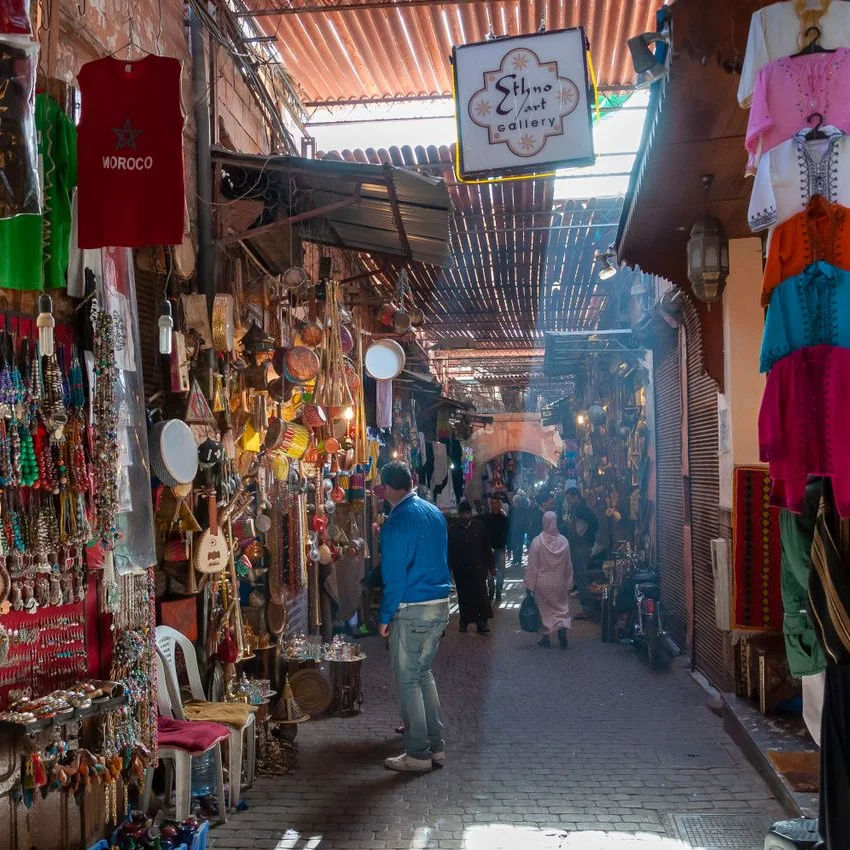
The souks of Marrakech represent one of the oldest and most extensive traditional market networks in the Islamic world, with origins stretching back to the city's foundation by the Almoravids in the 11th century. As Marrakech grew into a major hub of trans-Saharan trade, the souks expanded into a vast labyrinthine commercial district organized by craft and trade — leatherworkers, metalworkers, spice merchants, carpet sellers, and lantern makers each occupied their own designated quarters. The covered alleyways between Rahba Kedima and Bab Bou Jeloud evolved over centuries into a sophisticated commercial ecosystem where goods from across Africa, Europe, and the Middle East were exchanged. The souks were not merely markets but social institutions, governed by guilds and regulated by Islamic commercial law. During the Saadian golden age in the 16th century, the souks reached new heights of prosperity as Moroccan sugar, gold, and slaves flowed north while European textiles and manufactured goods came south. Despite modernization, the souks continue to function much as they have for nearly a thousand years, with craftsmen still practicing traditional techniques handed down through generations in workshops that open directly onto the narrow pedestrian streets.