





The Ramparts (City Walls)
The Ramparts (City Walls)
About this place
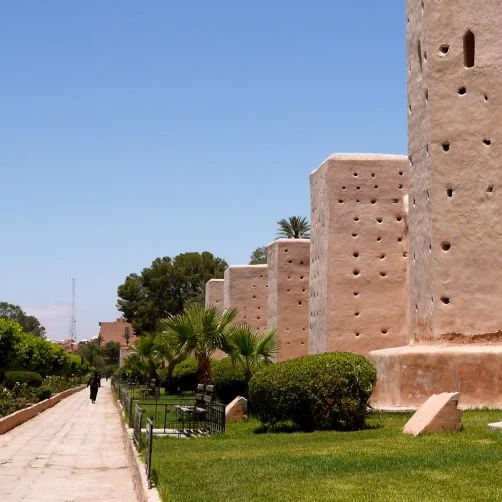
The walls of Marrakech represent one of the most impressive surviving examples of medieval Islamic fortification, enclosing the medina in a 19-kilometer circuit of pisé (rammed earth and lime) construction that has stood for over nine centuries. The decision to fortify the city was made by Almoravid Amir Ali ibn Yusuf around 1126, likely in response to the growing threat from the Almohads. Historical sources claim that construction was completed in only eight months at a cost of 70,000 gold dinars, with the path laid out by ropes and astrologers consulted for the most propitious start date. The walls were built from the distinctive red pisé clay that gives Marrakech its nickname, the "Red City." A major addition was made in the 1830s by Sultan Moulay Abd al-Rahman to enclose the Agdal Gardens, adding approximately 7 kilometers. The west ramparts bordering the Agdal were destroyed in 1862 and rebuilt by Sultan Sidi Muhammad IV. While portions of the south wall and several gates have been lost over time, the fortifications remain a powerful physical presence that continues to demarcate the boundary between the historic medina and the city's later expansions, serving as a tangible link to Marrakech's medieval past.